

Losing a tooth, or several, can affect much more than your appearance. It can change how you eat, how you speak, and how comfortable you feel smiling at a family dinner. The good news is that modern dentistry offers more than one way to replace missing teeth.
Two of the most common options are dental implants and dentures. Both can restore your smile, but they work very differently, and the best choice depends on your health, your goals, and your budget. This guide walks through the main differences so you can have a more confident conversation with your dentist.
Why Replacing Missing Teeth Matters
It’s easy to think a gap is only a cosmetic issue, especially if it’s toward the back of your mouth. But missing teeth can lead to bigger problems over time:
- Shifting teeth. Neighbouring teeth can drift into the gap, changing your bite.
- Bone loss. When a tooth is lost, the jawbone beneath it slowly begins to shrink because it no longer receives the stimulation that tooth roots provide.
- Difficulty chewing. This can limit what you eat and put extra strain on the remaining teeth.
- Changes in speech and facial shape. Over time, significant tooth and bone loss can alter how your face looks.
Replacing missing teeth sooner rather than later helps protect your remaining teeth and your jaw.
What Are Dental Implants?
A dental implant is a small post, usually made of titanium, that is placed in the jawbone to act as an artificial tooth root. Over a few months, the bone bonds with the implant, creating a very stable foundation. A crown is then attached on top, giving you a replacement tooth that looks and feels natural.
Implants can replace a single tooth. They can also support a bridge to replace several teeth, or anchor a full set of replacement teeth.
The advantages of implants:
- Stability. Implants stay firmly in place, so you can eat and speak with confidence.
- Bone protection. Because the implant sits in the jawbone, it helps preserve the bone in a way dentures can’t.
- Longevity. With good care, implants can last for many years, often decades.
- Natural look and feel. A well-made implant crown blends in with your other teeth.
- No effect on neighbouring teeth. Unlike a traditional bridge, a single implant doesn’t require reshaping healthy teeth beside the gap.
The drawbacks to consider:
- Higher upfront cost. Implants usually cost more at the start than dentures.
- A longer process. Treatment involves surgery and healing time, so it can take several months from start to finish.
- Not right for everyone. You need enough healthy bone and healthy gums. Some medical conditions, smoking, and untreated gum disease can affect success.
What Are Dentures?
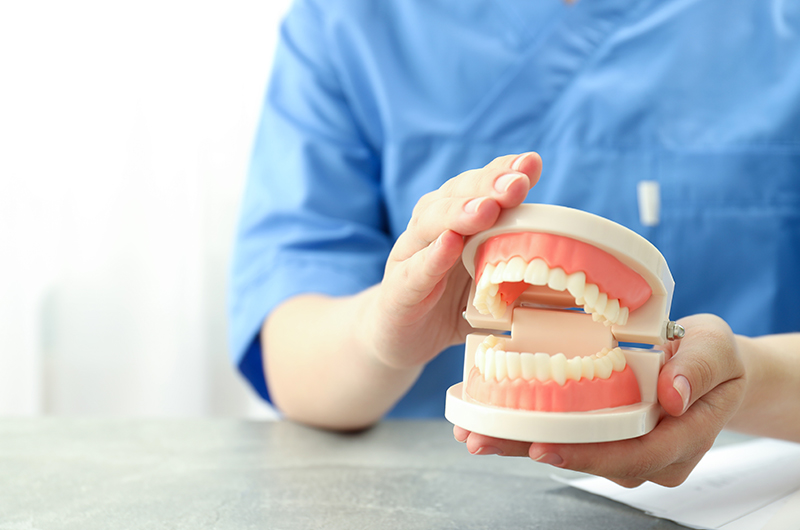
Dentures are removable replacement teeth. A full denture replaces all the teeth in the upper or lower jaw, while a partial denture fills in the gaps when some natural teeth remain. They’re custom made from impressions of your mouth so they fit comfortably and look natural.
The advantages of dentures:
- Lower initial cost. For many people, dentures are the more affordable way to replace multiple teeth.
- Non-surgical. In most cases, getting dentures doesn’t involve surgery, which makes them a good option for people who aren’t candidates for implants.
- Faster process. The timeline from impressions to a finished set is usually much shorter than with implants.
- Easy to adjust or repair. If your mouth changes, dentures can often be relined or modified.
The drawbacks to consider:
- Less stability. Dentures can shift or slip, especially on the lower jaw, which can make eating and speaking harder.
- Ongoing adjustments. As your jawbone changes over time, dentures can loosen and need relining or replacing.
- Daily care. They need to be removed and cleaned every day and soaked overnight, depending on the type.
- No bone stimulation. Dentures sit on top of the gums, so they don’t prevent gradual bone loss.
A Middle Path: Implant-Supported Dentures
You don’t always have to choose one or the other. Some patients benefit from implant-supported dentures, where a denture is secured to a small number of implants. This gives you much better stability than traditional dentures, without needing an implant for every missing tooth. If loose dentures have been frustrating you, it’s worth asking whether this could work for you.
Comparing Implants and Dentures Side by Side
| Dental Implants | Dentures | |
|---|---|---|
| Stability | Fixed in the jaw | Rest on gums; may shift |
| Feel | Closest to natural teeth | Can feel bulky at first |
| Upfront cost | Higher | Lower |
| Treatment time | Several months | Shorter |
| Surgery needed | Yes | Usually no |
| Daily care | Brush and floss like natural teeth | Remove and clean daily |
| Bone preservation | Yes | No |
| Lifespan | Often many years with care | Typically need relining or replacement over time |
Questions to Ask Yourself
Choosing between the two is personal. These questions can help you think it through:
- How many teeth am I replacing? One tooth is often a good case for an implant. Replacing an entire arch may call for a different approach.
- What’s my general health like? Conditions like uncontrolled diabetes or heavy smoking can affect implant healing.
- How is my jawbone? Your dentist can assess whether there is enough bone, or whether extra steps would be needed.
- What’s my budget and timeline? Consider both the upfront price and the long-term cost of maintenance and replacements.
- What matters most to me? For some people it’s the permanence of implants. For others, it’s the simplicity and lower cost of dentures.
What to Expect at Your Consultation
The best way to decide is to sit down with a dentist who can look at your actual mouth. At Brockton Family Dental, a consultation typically includes an examination of your teeth, gums, and bite, a discussion of your goals and concerns, and imaging when needed to assess your bone. We’ll then walk you through your options and give you a clear treatment plan with the procedures, timelines, and costs explained, so there are no surprises.
There’s no pressure to decide on the spot. Our goal is for you to leave understanding your choices and feeling comfortable with the next step.
Caring for Your New Smile
Whichever option you choose, good care makes it last:
- Implants: Brush twice daily, clean between teeth, and keep up with regular checkups and cleanings to keep the surrounding gums healthy.
- Dentures: Clean them daily, handle them carefully, remove them at night if advised, and see your dentist regularly so the fit can be checked.
Talk to Our Walkerton Team
Missing teeth don’t have to hold you back from eating the foods you love or smiling freely. Whether dental implants or dentures are the better fit for you, our team will help you find a solution that suits your health, your lifestyle, and your budget.
Call Brockton Family Dental at 519-507-8877, or book an appointment online to start the conversation.